
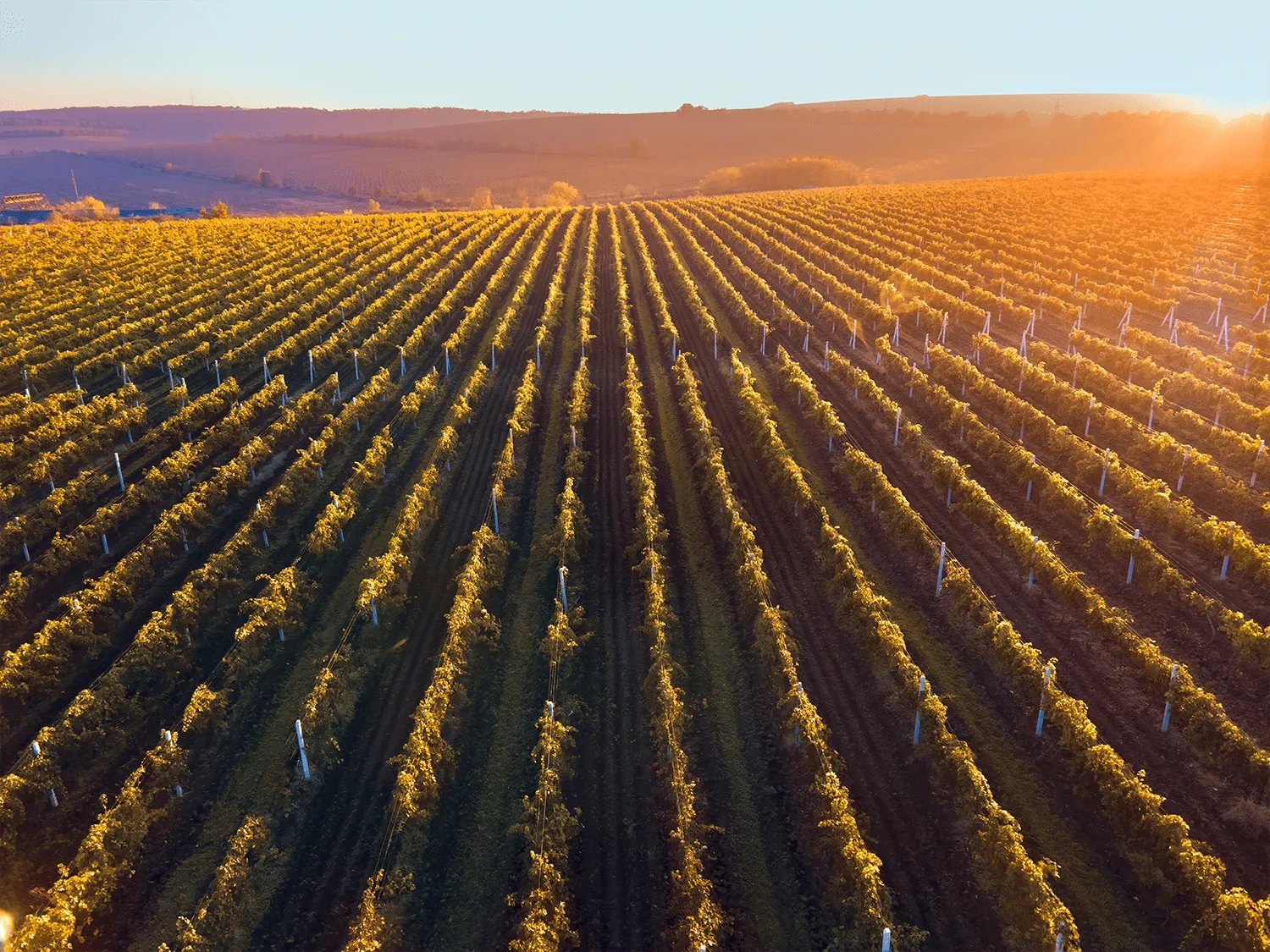
Jumilla is not the coast. It is a plateau: an inland mesa where the vine lives between 400 and 900 metres, with more than three thousand hours of sun and scarce rain. The sea is far; the heat is not. What saves the grape is the night.
A furnace by day, a sierra by night
The thermal amplitude —much heat by day, cool at dusk— lets Monastrell ripen without losing acidity. The berry concentrates fruit and the must keeps tension. Without that swing, Jumilla red would be something else: heavier, less precise.
A landscape you drink
Bush vines, pale soils, a dry horizon. Whoever visits the house sees that landscape before tasting. That is why the walk begins in the field: the glass is not understood without having trodden the plateau.