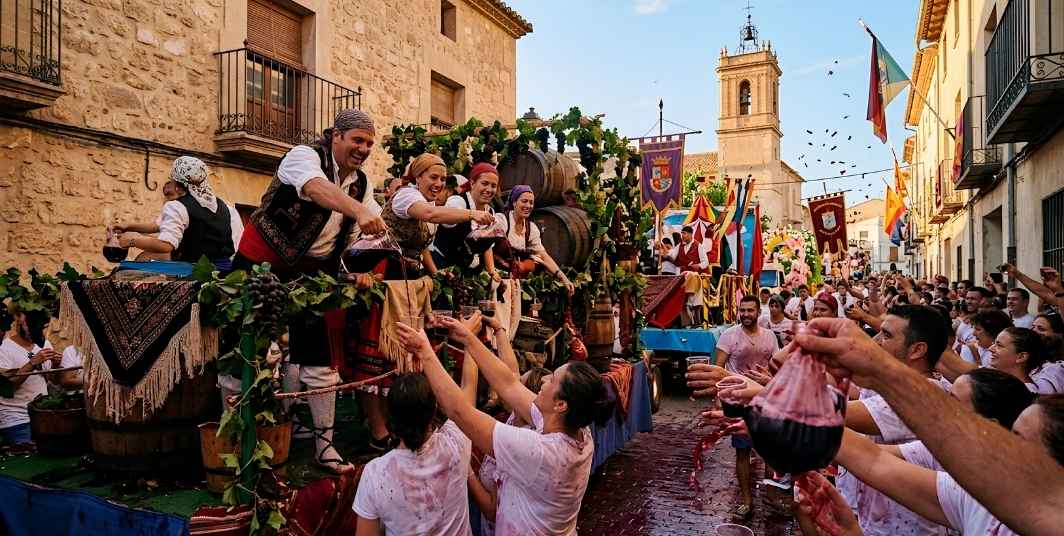

The harvest consists in the gathering of grapes in order afterwards to carry out the making of liquor or wine. In the months of August and September is the gathering in Spain; now this depends on two factors, the climate and the ripening of the grape.
When the harvest is carried out
The harvest is subject to the area where it is located. For example, if it is in the Southern Hemisphere, the stage of the crop is approximately between the months of February and April. Now in the Northern Hemisphere, the crop is carried out between the months of July and October.
The change from one area to another determines the degree of ripening of the grape, which conditions the time at which the crop is gathered.
How the process of the crop is carried out
There exist 2 types of harvest to carry out the process of gathering grapes.
1. Manual harvest
This procedure is used to produce sparkling wines and wines of very high quality; for this the first selection of the bunches is taken. The grapes are transported in trailers or in different crates where they will not be compressed.
In this class of harvest the garillo is used, a word quite unknown but in the world of the vineyards very much used. It is a special knife used to cut those bunches. Small scissors may also be used in the process.
2. Mechanical harvest
It is a more economical and less complex procedure. A special machine is used that moves the bunches in order to proceed to detach the grapes. These are gathered in vessels and afterwards emptied in the process of haulage. It has the characteristic of being much faster.
Independent of the process used, one must avoid taking grapes that are wet. This is done so that the wine is not affected in its quality. The grapes must be cut when the climate is warm and in nocturnal hours, so as to avoid their rotting. When the grapes are gathered they must be taken immediately to the respective cellars to begin the process.
Brief origins of the harvest
The origins of this delicious tradition are located in ancient Egyptian texts. They have an antiquity of more than five thousand years. These texts describe how the labours of gathering the grapes are. In them one can also read how the process of treading is in order to obtain the must and afterwards that of fermentation in order to achieve so exquisite a drink.
It is relevant that the Egyptians gave this type of activity a social, cultural, religious and agricultural character. They celebrated the crop and offered it to the god Osiris. On the other hand the civilisations of Ancient Rome and Ancient Greece carried out dances and festivities. They did this to honour the gods Bacchus and Dionysus.
Thanks to these origins the social, festive and economic character of this type of activity has been inherited, and for that reason the phrase is known «Without harvest, there is no wine». If this article has pleased you, do not forget to share it with your friends and to visit our cellar in Jumilla Delampa.